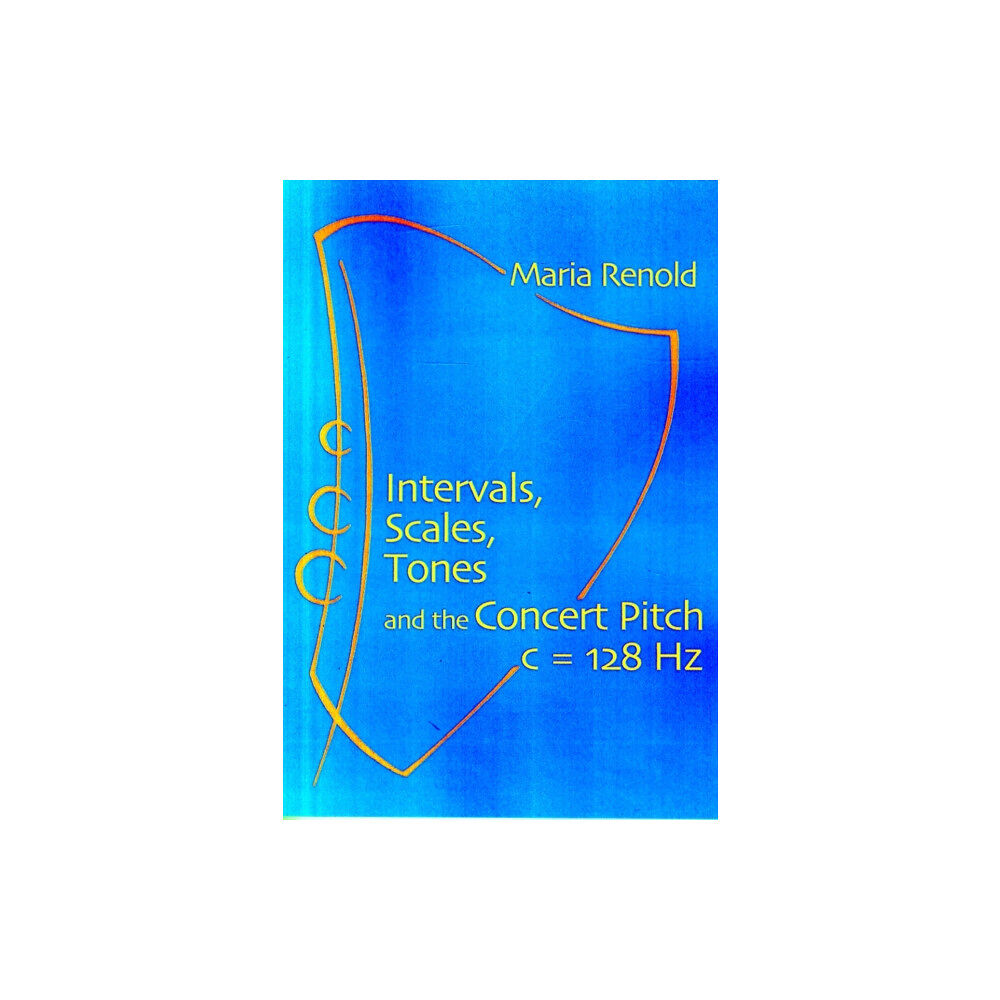
Why is it that certain intervals, scales and tones sound genuine and others false? Is the modern person able to experience a qualitative difference in a tone's pitch? If so, what are the implications for modern concert pitch and how instruments of fixed tuning are tuned? Maria Renold tackles these and many other questions, providing a wealth of scientific data.
Her pioneering work is the result of a lifetime's research into Western music's Classical Greek origins, as well as a search for new developments in modern times. She strives to deepen musical understanding through Rudolf Steiner's spiritual-scientific research, and she also elucidates many of Steiner's often puzzling statements about music.
The results of her work include the following discoveries: that the octave has two sizes (a 'genuine' sounding octave is bigger than the 'perfect' octave); that there are three sizes of 'perfect' fifths; that an underlying 'form principle' for all scales can be found; and, most importantly, the discovery of a method of tuning the piano which is more satisfactory than equal temperament.
She also gives foundation to some of Rudolf Steiner's statements such as: 'c is always prime' and 'c = 128 Hz = Sun'.
| Format |
Häftad |
| Omfång |
208 sidor |
| Språk |
Engelska |
| Förlag |
Temple Lodge Publishing |
| Utgivningsdatum |
2015-01-27 |
| ISBN |
9781906999735 |