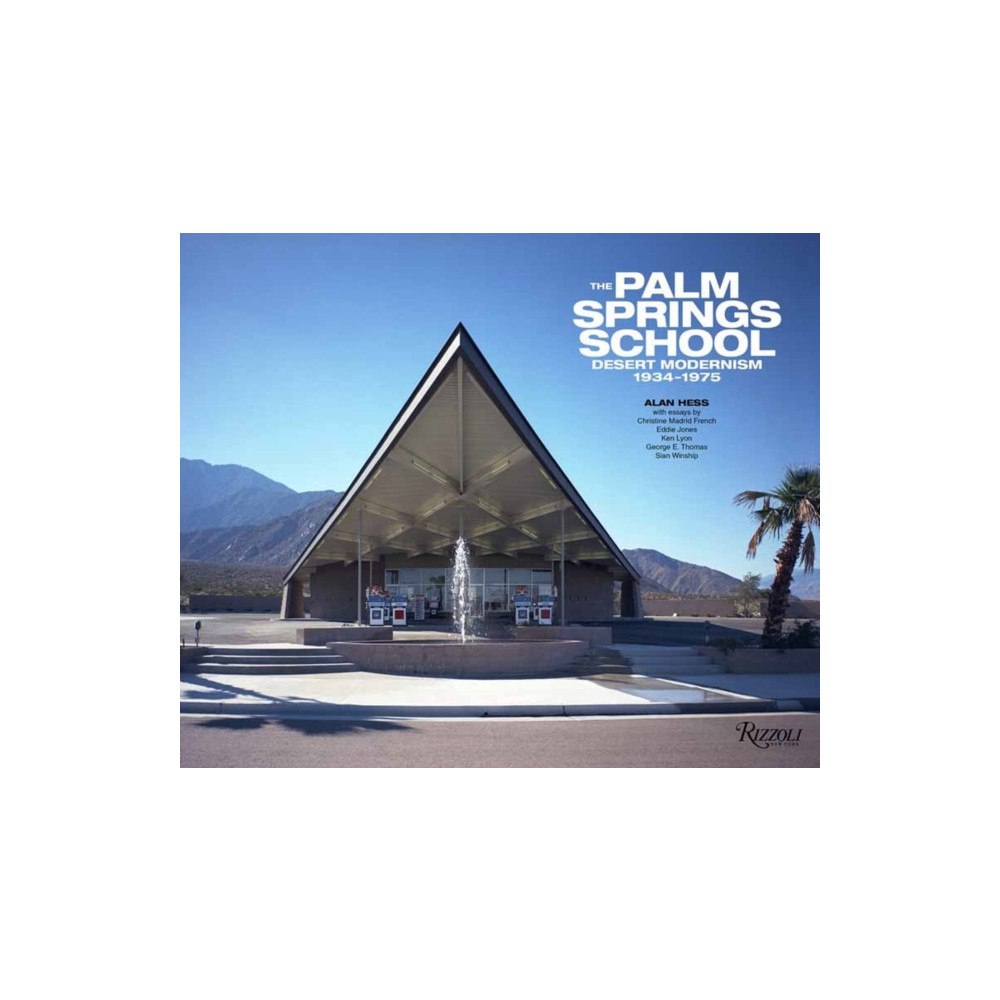
Palm Springs is at the center of a unique tradition in architecture marked by invention and a sensitivity to local conditions that has resulted in design that exerts an influence far greater than the town’s small size. The book is the first to fully explore the wide ranging forms this architecture has taken, from houses to gas stations, hotels to airports, banks to restaurants and spas.Much more than a resort destination, Palm Springs has served as a laboratory of the Modern; here so much architectural innovation and design took formFrom the steel-and-glass boxes of Richard Neutra to the earthy organic homes of John Lautner, and everything in between, the solutions of architects and designers—including notably William F. Cody, E. Stewart Williams, and Albert Frey—were diverse and are ever more relevant in the face of contemporary challenges.
Their answers addressed questions that still hold urgency: How to design sustainably in harsh climates? How to use technology efficiently and creatively to meet those challenges? How to build affordable and high-quality mass-produced housing? How to reflect a region’s culture, economy, and distinctive atmosphere?
Architects here responded to nature’s climatological demands, and Palm Springs became a center for innovations that were rooted in practice more than theoryBenefitting from the architectural freedoms offered by the remoteness of the California desert, designers explored new approaches that we can now identify as central to the Palm Springs School, shown here in rich archival and contemporary photography.
| Format |
Inbunden |
| Omfång |
256 sidor |
| Språk |
Engelska |
| Förlag |
Rizzoli International Publications |
| Utgivningsdatum |
2025-02-11 |
| ISBN |
9780847842551 |