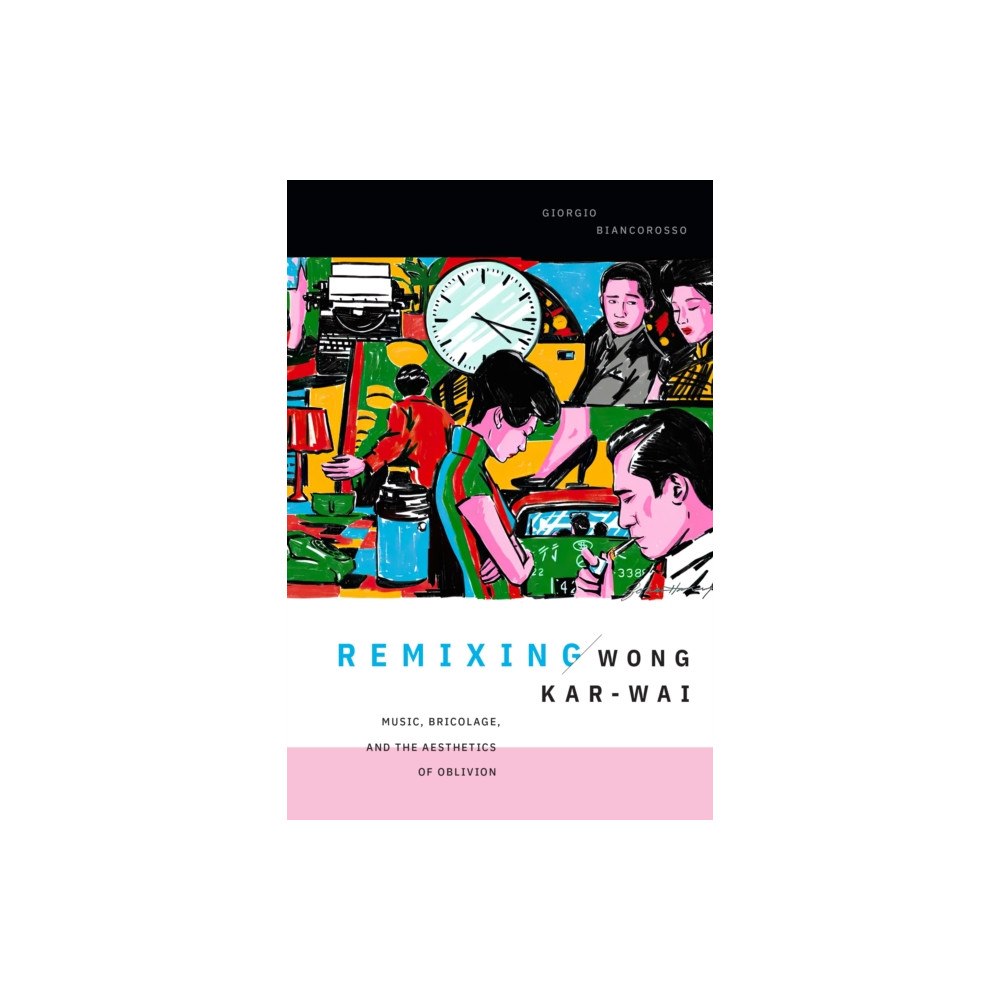
Like his fellow filmmakers Stanley Kubrick, Quentin Tarantino, and Sofia Coppola, Wong Kar-wai crafts the soundtracks of his films by jettisoning original scores in favor of commercial recordings. In
Remixing Wong Kar-wai, Giorgio Biancorosso examines the combinatorial practice at the heart of Wong’s cinema to retheorize musical borrowing, appropriation, and repurposing.
Wong’s irrepressible penchant for poaching music from other films-whether old Chinese melodramas, Hollywood blockbusters, or European art films-subsumes familiar music under his own brand of cinema. As Wong combs through musical and cinematic archives and splices disparate music together, exceedingly well-known music loses its previous associations and acquires an infinite new constellation of meanings in his films.
Drawing on Claude LÉvi-Strauss’s concept of bricolage, Biancorosso contends that Wong’s borrowing is akin to a practice of creative destruction in which Wong becomes a bricoleur who remixes music at hand to create new and complete, self-sustaining statements.
By outlining Wong’s modus operandi of indiscriminate borrowing and remixing, Biancorosso prompts readers to reconsider the significance of transforming preexisting music into new compositions for film and beyond.
| Format |
Häftad |
| Omfång |
240 sidor |
| Språk |
Engelska |
| Förlag |
Duke University Press |
| Utgivningsdatum |
2025-01-07 |
| ISBN |
9781478031178 |