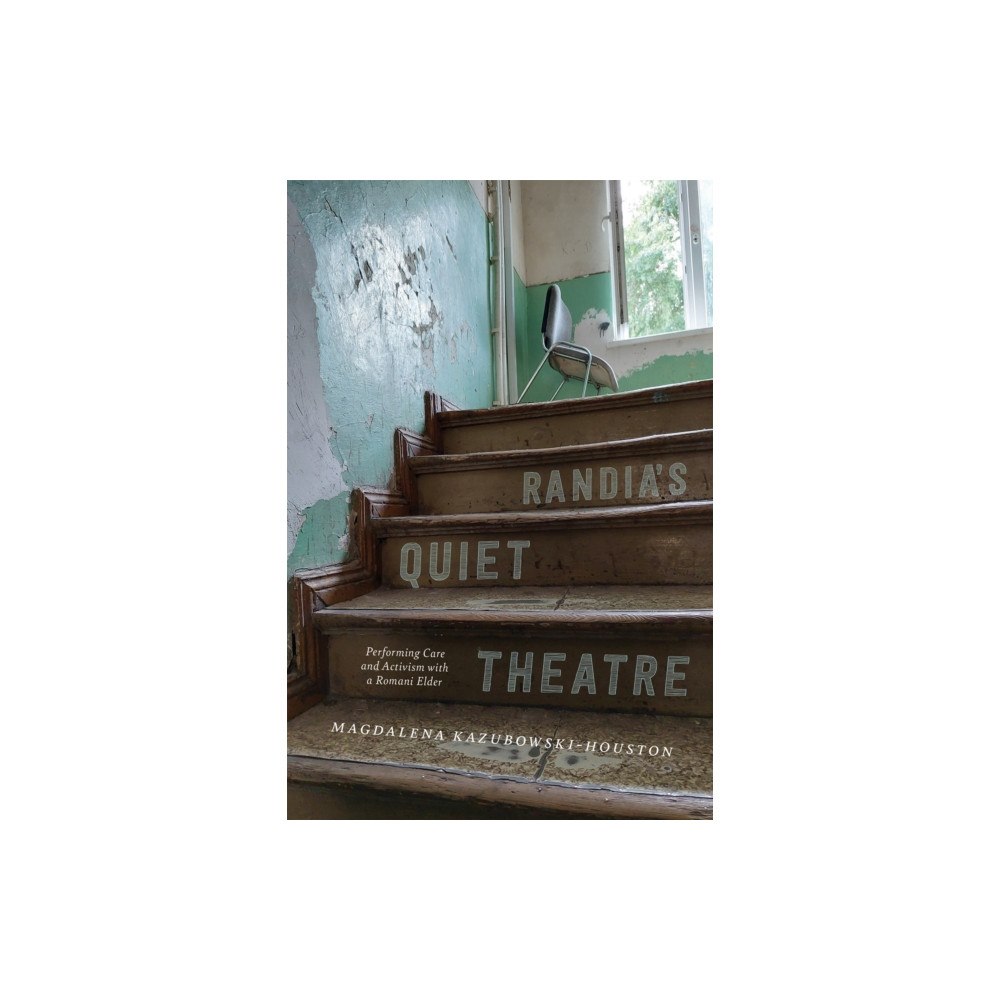
Throughout Poland, tens of thousands of elderly people live with disabilities in four-storey walk-up apartment buildings. In many cases their children have emigrated; they live with loneliness, a lack of basic amenities, silence, and the absence of care. They are known as "prisoners of the fourth floor."
In Randia's Quiet Theatre Magdalena Kazubowski-Houston mixes autofiction, ethnography, and theatrical improvisation to unravel the politics of aging in Poland.
At the centre of the book is Randia, a Romani fortune teller, storyteller, and performer confined to her fourth-floor apartment in old age. In interviews, Randia's identity is fixed: she tells of the hardships she faced as a Romani girl and as a wife, mother, and grandmother whose relationship with her family was shaped by separation, sickness, and death.
But in storytelling sessions staged in her home, Randia steps into characters and is freed: her tales move between the past, the present, and the future, across life and death; her characters look after one another and change history. Kazubowski-Houston finds in Randia's performances a quiet activism through which she envisages alternative lives and articulates an ethics of care among individuals, communities, and spirits.
Interwoven throughout Randia's Quiet Theatre are Kazubowski-Houston's own stories about caring for her elderly and disabled mother, making the book a collaborative, reflexive, and complex creative work.
It reveals how ethnographers and their interlocutors can stand on more equal ground. Ultimately it is a profound reflection on how the elderly can live with dignity and how we can care for each other.
| Format |
Häftad |
| Omfång |
282 sidor |
| Språk |
Engelska |
| Förlag |
McGill-Queen's University Press |
| Utgivningsdatum |
2025-04-15 |
| ISBN |
9780228024781 |