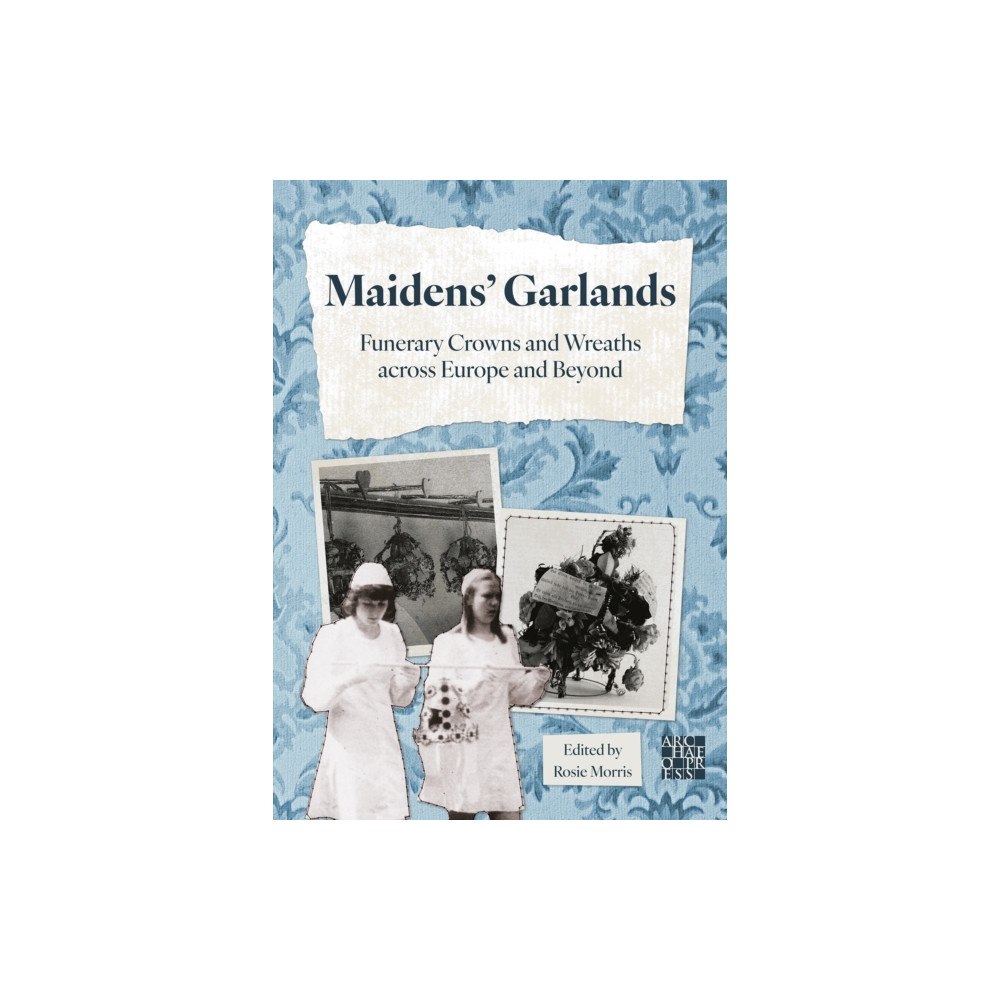
Awarding a ‘Crown of Life’ to those who had remained steadfast against ‘lusts of the flesh’ was a popular custom that was prevalent throughout post-Reformation Britain and Europe. The crown was also celebrated as a substitute wedding crown by those who believed in the marriage in heaven of the soul and bridegroom, Jesus Christ.
The shape and construction of maidens’ crowns varied from three-dimensional crown shapes to two-dimensional diadems, chaplet garlands or wreaths. Some were buried with the deceased while others were hung within the parish church. In Germany, the custom was practised by both Protestant and Catholic denominations. Each crown was churched in some way, yet there is no mention of them in either Anglican or Catholic Canon Law.
Nonetheless they form a fundamental part of a popular but unsung burial custom. In this book, experts in the fields of history, archaeology and conservation provide a European comparative study of the custom. Chapters explore its emergence, history and cultural significance, as well as the variety and construction techniques of the crowns themselves.
Archaeological overviews and case studies shed further light on a locally diverse and dynamic practice. Conservation issues are highlighted in the study of a crown from Theydon Mount, Essex. Together the chapters provide a comprehensive introduction to an important, yet little-known, funerary custom practiced throughout Europe.
| Format |
Häftad |
| Omfång |
218 sidor |
| Språk |
Engelska |
| Förlag |
Archaeopress |
| Utgivningsdatum |
2026-04-02 |
| ISBN |
9781805832133 |