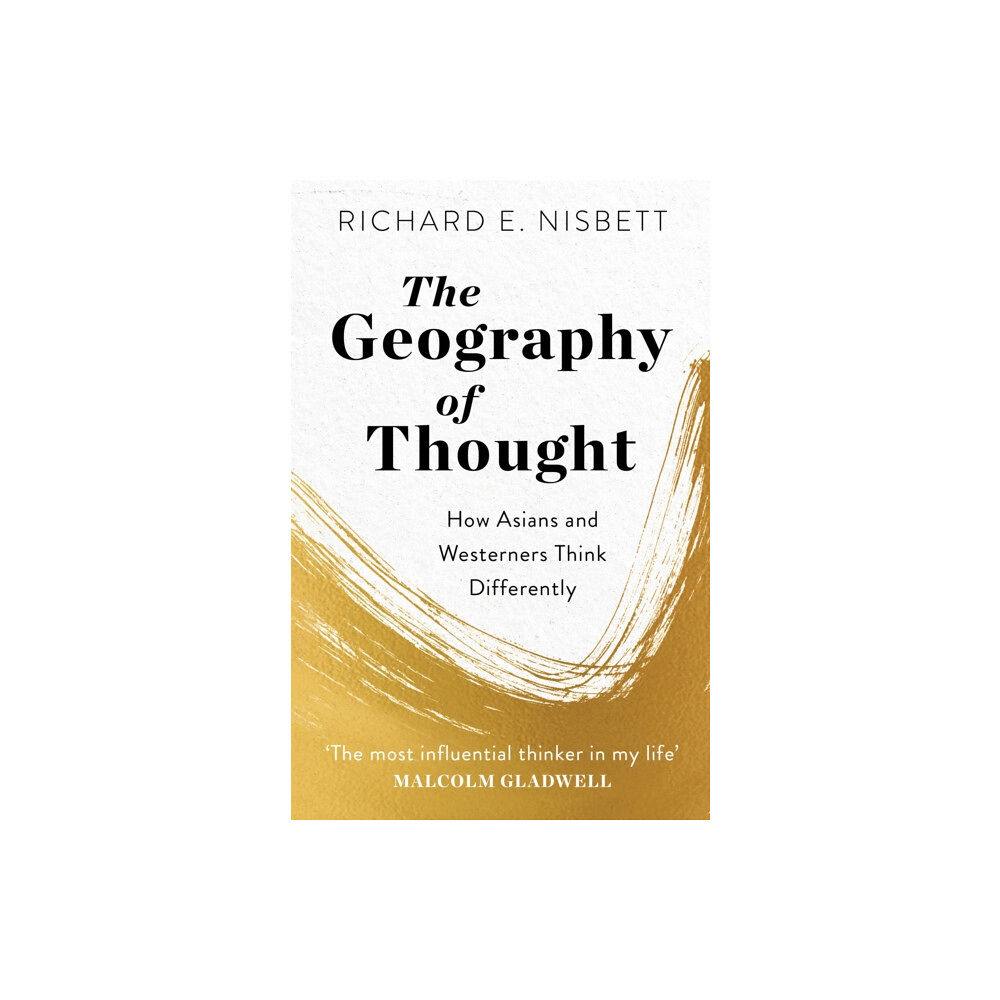
'The most influential thinker, in my life, has been the psychologist Richard Nisbett. He basically gave me my view of the world.'
-Malcolm Gladwell
"One of the world's leading thinkers" Daily Telegraph
When Richard Nisbett showed an animated underwater scene to his American students, they zeroed in on a big fish swimming among smaller fishJapanese subjects, on the other hand, made observations about the background environment...and the different "seeings" are a clue to profound underlying cognitive differences between Westerners and East Asians.
As Professor Nisbett shows in The Geography of Thought people actually think - and even see - the world differently, because of differing ecologies, social structures, philosophies, and educational systems that date back to ancient Greece and China, and that have survived into the modern worldAs a result, East Asian thought is "holistic" - drawn to the perceptual field as a whole, and to relations among objects and events within that field.
By comparison to Western modes of reasoning, East Asian thought relies far less on categories, or on formal logic; it is fundamentally dialectic, seeking a "middle way" between opposing thoughtsBy contrast, Westerners focus on salient objects or people, use attributes to assign them to categories, and apply rules of formal logic to understand their behaviour.
| Format |
Häftad |
| Omfång |
288 sidor |
| Språk |
Engelska |
| Förlag |
John Murray Press |
| Utgivningsdatum |
2019-07-11 |
| ISBN |
9781529309416 |