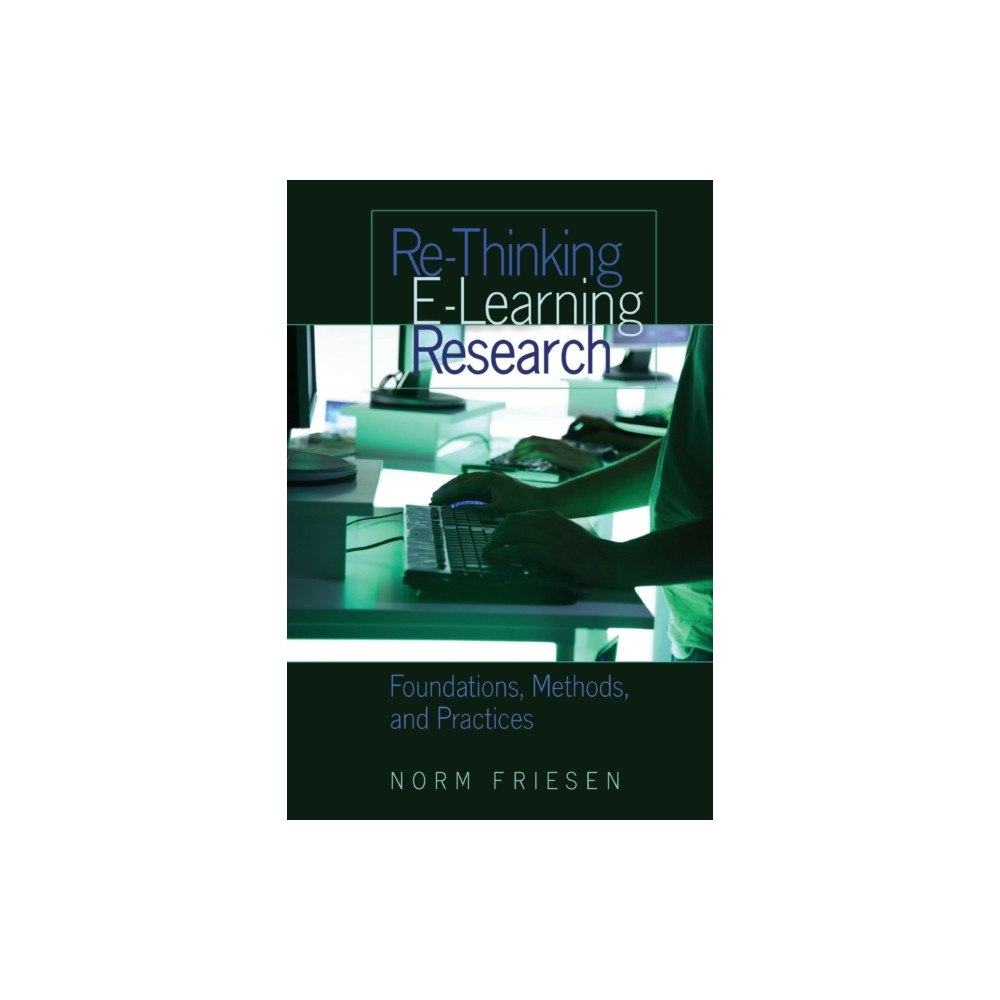
In the rapidly-changing world of the Internet and the Web, theory and research struggle to keep up with technological, social, and economic developments. In education in particular, a proliferation of novel practices, applications, and forms – from bulletin boards to Webcasts, from online educational games to open educational resources – have come to be addressed under the rubric of «e-learning».
In response to these phenomena,
Re-thinking E-Learning Research introduces a number of research frameworks and methodologies relevant to e-learning. The book outlines methods for the analysis of content, narrative, genre, discourse, hermeneutic-phenomenological investigation, and critical and historical inquiry.
It provides examples of pairings of method and subject matter that include narrative research into the adaptation of blogs in a classroom setting; the discursive-psychological analysis of student conversations with artificially intelligent agents; a genre analysis of an online discussion; and a phenomenological study of online mathematics puzzles.
Introducing practical applications and spanning a wide range of the possibilities for e-learning, this book will be useful for students, teachers, and researchers in e-learning.
| Format |
Häftad |
| Omfång |
268 sidor |
| Språk |
Engelska |
| Förlag |
Peter Lang Publishing Inc |
| Utgivningsdatum |
2008-12-04 |
| ISBN |
9781433101359 |