
- Hem
- Böcker
- Kurslitteratur
- Historia
- Operativo Independencia (häftad, eng)
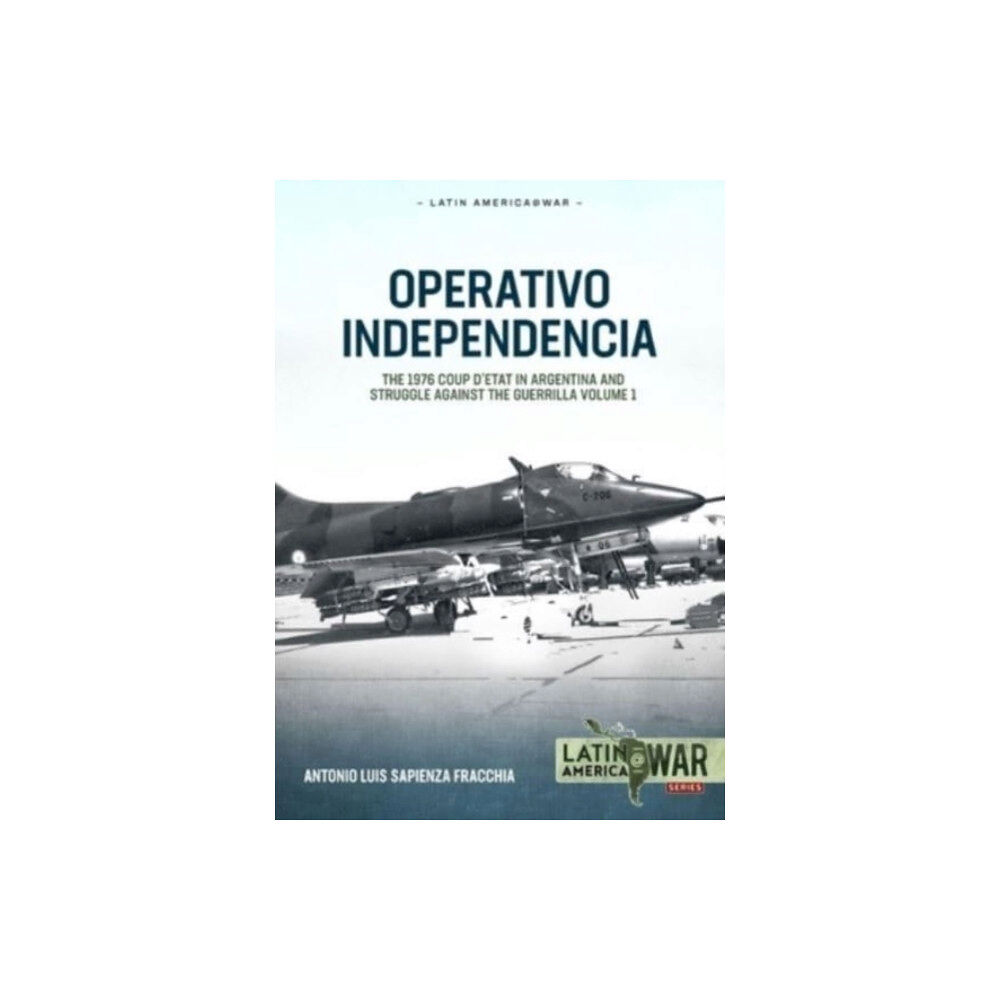
Operativo Independencia (häftad, eng)
Produktbeskrivning
International Marxist terrorism won the sympathy of many university students, Catholic movements and intellectuals in Argentina in the 1960s and 1970s, using terms such as ‘dependency, imperialism, subjugation, colonialism and dictatorship’.
Many of these young people had been catechists linked to Third World priests, but instead of taking the peaceful path of Christian preaching, they chose the bloody path of arms. Marxism-Leninism managed to penetrate the minds of socially well-off young people, convincing them that armed struggle was the only valid alternative against military dictatorships and Yankee imperialism.
This is how they recruited hundreds of young people who later saw their lives and dreams cut short by a useless fight against a well-armed and highly professional Army.
Although the first groups began to appear after the overthrow of General Juan Domingo Perón in 1955, the main guerrilla groups would only appear towards the end of the 1960s.
They would ‘prepare’ the ground for Perón to return to the country and be President again. Perón called them ‘Wonderful Youth’, but he had created a monster he could not handle in his last years of life.
All these groups were inspired by the successful Cuban revolution led by Fidel Castro in 1959 with an Argentine, Ernesto Guevara, aka Che, and unrealistically thought that they could seize power and turn Argentina into a ‘socialist homeland’ in the best Cuban style.
But Argentina was not Cuba, and the Argentine Armed Forces, despite suffering deep divisions and internal conflicts, were powerful, well-armed and well-trained. Their members were highly motivated to defend the political model at the time.
The subversive bands aimed to produce chaos in the country, infiltrating the Peronist mass, destroying institutions, and supporting violence against the state.
To achieve their objectives, the guerrilla groups resorted to the most despicable acts: kidnapping politicians, police and military officers, diplomats, and national or foreign businessmen or their relatives for ransom; hijackings; taking prisons to free their fellow terrorists; bombing politicians’ or military officers’ houses, foreign factories, police stations and military bases; to the assassination of politicians, police and army officers, including even a former president, General Aramburu.
Everything had an objective: to create chaos in the country to prepare for the coming of Perón.
When the military governments gave way to free elections, with the Peronist candidate Héctor Cámpora winning in 1973, guerrilla activity did not decrease but instead increased significantly. Cámpora belonged to the Peronist left and was greatly influenced by his two Montonero sons, so Montoneros held crucial government positions.
That cost him a severe reprimand from the Peronist leader, and when General Perón assumed the presidency, he declared these groups illegal and began to fight them. But there was also the Peronist right wing in the CGT (General Confederation of Labor) and later the so-called Triple A (Argentine Anti-Communist Alliance) led by José López Rega, which would be in charge of avenging those murders and kidnappings of trade unionists by Marxist groups, especially between 1973 and 1976.
General Perón did not live much longer, and it was his wife, the vice president, who, upon assuming the presidency, had to face the severe problem of the guerrillas.
Although her government ordered Operation Independence, she would not see the end of this story either, which would occur in another military government led by Lieutenant General Videla towards the end of the 1970s.
Operativo Independencia Volume 1 covers the long period that began after the overthrow of the government of Perón in 1955 until 1974, the year before the launch of Operativo Independencia.
All the subversive groups that appeared in that period, their prominent leaders and actions are covered. Of all of them, only two would be protagonists of the most violent crimes in the mid-1970s in Argentina, the People's Revolutionary Army (ERP) and the Montoneros, whose organization is detailed in this volume.
| Format | Häftad |
| Omfång | 108 sidor |
| Språk | Engelska |
| Förlag | Helion & Company |
| Utgivningsdatum | 2024-06-30 |
| ISBN | 9781804514672 |
Specifikation
Böcker
- Format Häftad
- Antal sidor 108
- Språk Engelska
- Utgivningsdatum 2024-06-30
- ISBN 9781804514672
- Förlag Helion & Company
Leverans
Vi levererar ditt paket med Budbee, Instabox och DB Schenker. Frakten kostar 49 kr men handlar du för över 499 kr är det fri frakt. De exakta leveranstiderna för varje produkt ser du direkt på produktsidan och i kassan. När din order skickats får du en spårningslänk via e-post eller SMS.
Betalning
Hos oss betalar du tryggt via Avarda. Du kan välja mellan Swish, kort (VISA/MasterCard), faktura med 30 dagar eller konto för delbetalning. Alla köp sker krypterat och säkert.
Retur & reklamation
Som privatkund har du 14 dagars ångerrätt enligt distansavtalslagen. Retur kostar 49 kr och bokas via kundtjänst innan du skickar tillbaka varan. Återbetalning sker alltid via samma betalmedel du använde vid köpet.
Du har 3 års reklamationsrätt enligt konsumentköplagen. Vid godkänd reklamation står vi för returfrakten. Kontakta oss på [email protected] om du vill göra en retur eller reklamation, så guidar vi dig genom processen.
Specifikation
Böcker
- Format Häftad
- Antal sidor 108
- Språk Engelska
- Utgivningsdatum 2024-06-30
- ISBN 9781804514672
- Förlag Helion & Company