
- Hem
- Böcker
- Kurslitteratur
- Historia
- In the Shadow of Corinium: Prehistoric and Roman Occupation at Kingshill South, Cirencester, Gloucestershire (häftad, en...
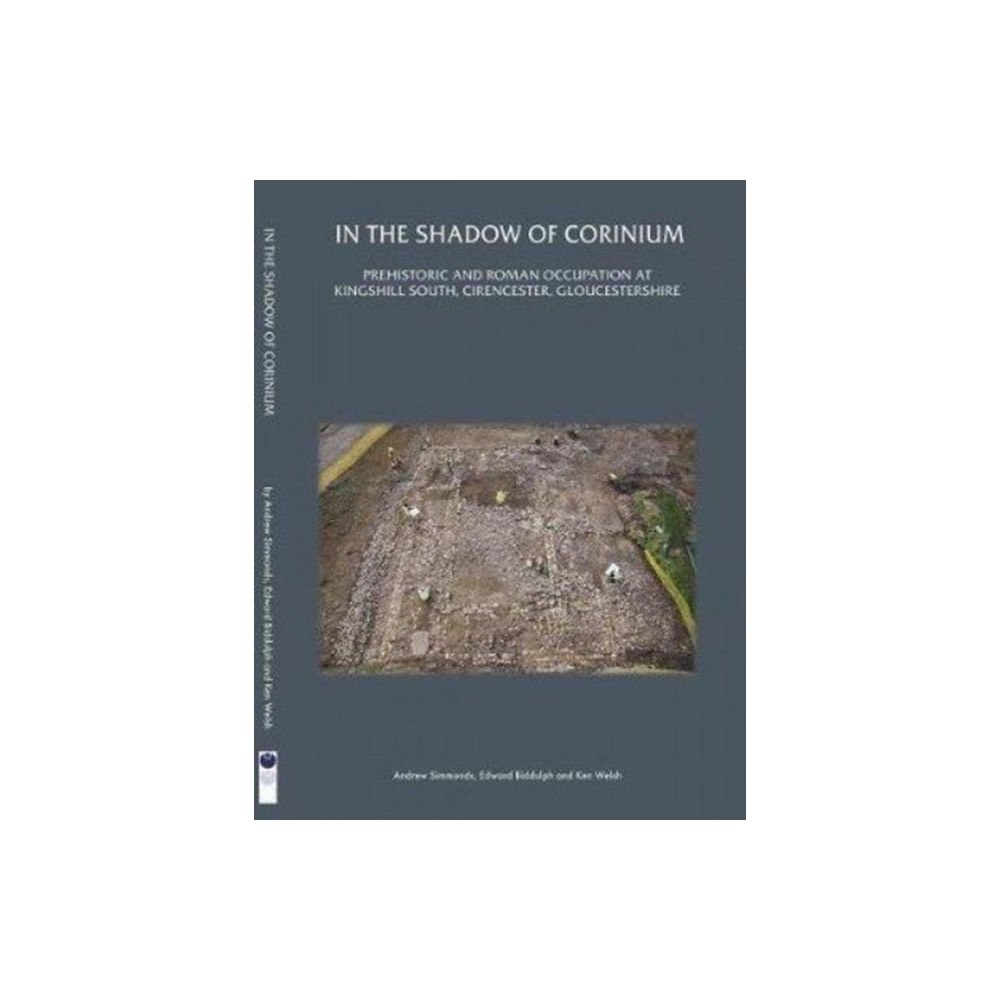
In the Shadow of Corinium: Prehistoric and Roman Occupation at Kingshill South, Cirencester, Gloucestershire (häftad, en...
Produktbeskrivning
The fieldwork uncovered evidence for activity spanning the prehistoric and Roman periods. Apart from worked flint of Mesolithic date recovered from later contexts, and a group of flint tools once in situ but subsequently eroded into a later ditch, the earliest evidence for activity was a single pit dating to the late Neolithic period or early Bronze Age.
A settlement comprising a post-built roundhouse, a possible second structure, and an associated fenceline was established during the late Bronze Age-early Iron Age Following a hiatus in occupation, an arrangement of rectilinear fields defined by ditches was laid out across part of the southern slope during the late 1st century AD.
The resulting upper and lower enclosures represent the southern limit of a more extensive estate situated on the western slope overlooking the River Churn. The lower enclosure was divided into a series of subsidiary enclosures that presumably served some agricultural function, perhaps as paddocks for livestock.
The upper enclosure was largely devoid of internal features. Both enclosures remained in use, though in modified form, until the late 4th century. Three buildings were recorded entirely or partly within the area of the excavation. Building 1, constructed on the edge of the upper enclosure in the 2nd century, was a domestic, stone-footed building comprising a large rectangular room with off-centre hearth, surrounded by a corridor subdivided into small rooms.
The building lacked the characteristics typically associated with a villa, such as underfloor heating and tessellated floors, but was clearly a building of some pretension and could be described as a proto-villa. Building 2, built within the lower enclosure also during the 2nd century, was an aisled building with an apsidal end.
It was of uncertain function, but it is likely that the building served an agricultural role. Building 3, attributed to the late Roman period based on coin evidence, was not excavated, but was interpreted as a granary from the plan of the exposed parts. Farming was the main economic basis of the settlement, with both crop cultivation and animal husbandry being practised.
Spelt wheat and hulled barley were the principal crops. Sheep dominated during the early and middle Roman periods, with cattle became increasingly important over time. Two corndryers were built in the late Roman period. Corinium is likely to have been the main market for the grain, meat, wool and other goods produced at the site.
Evidence for craft activity was also recorded, including pin-making and, to a lesser extent, horn-working and smithing. Eleven formal burials, including those of adults and neonates, were encountered across the settlement. Analysis of the remains revealed something of the lives of the settlement's inhabitants.
One adult male had become embroiled in fist fights, possibly because of adverse reactions to a facial disfigurement caused by a tumour around his left eye. The habitual, possibly craft-related, activity performed by a young female adult required her to spend much of her time in a squatting position.
In addition to the formal burials, disarticulated human bone was recovered from 34 locations. The settlement was abandoned by the late 4th century. The site appears to have been agricultural land until the establishment of Cirencester's eastern suburb, though Ordnance Survey mapping indicates small-scale stone quarries in the area.
| Format | Häftad |
| Omfång | 552 sidor |
| Språk | Engelska |
| Förlag | Oxford University School of Archaeology |
| Utgivningsdatum | 2018-05-15 |
| ISBN | 9781905905416 |
Specifikation
Böcker
- Format Häftad
- Antal sidor 552
- Språk Engelska
- Utgivningsdatum 2018-05-15
- ISBN 9781905905416
- Förlag Oxford University School of Archaeology
Leverans
Vi levererar ditt paket med Budbee, Instabox och DB Schenker. Frakten kostar 49 kr men handlar du för över 499 kr är det fri frakt. De exakta leveranstiderna för varje produkt ser du direkt på produktsidan och i kassan. När din order skickats får du en spårningslänk via e-post eller SMS.
Betalning
Hos oss betalar du tryggt via Avarda. Du kan välja mellan Swish, kort (VISA/MasterCard), faktura med 30 dagar eller konto för delbetalning. Alla köp sker krypterat och säkert.
Retur & reklamation
Som privatkund har du 14 dagars ångerrätt enligt distansavtalslagen. Retur kostar 49 kr och bokas via kundtjänst innan du skickar tillbaka varan. Återbetalning sker alltid via samma betalmedel du använde vid köpet.
Du har 3 års reklamationsrätt enligt konsumentköplagen. Vid godkänd reklamation står vi för returfrakten. Kontakta oss på [email protected] om du vill göra en retur eller reklamation, så guidar vi dig genom processen.
Specifikation
Böcker
- Format Häftad
- Antal sidor 552
- Språk Engelska
- Utgivningsdatum 2018-05-15
- ISBN 9781905905416
- Förlag Oxford University School of Archaeology