
- Hem
- Böcker
- Kurslitteratur
- Historia
- Futile Exercise? (häftad, eng)
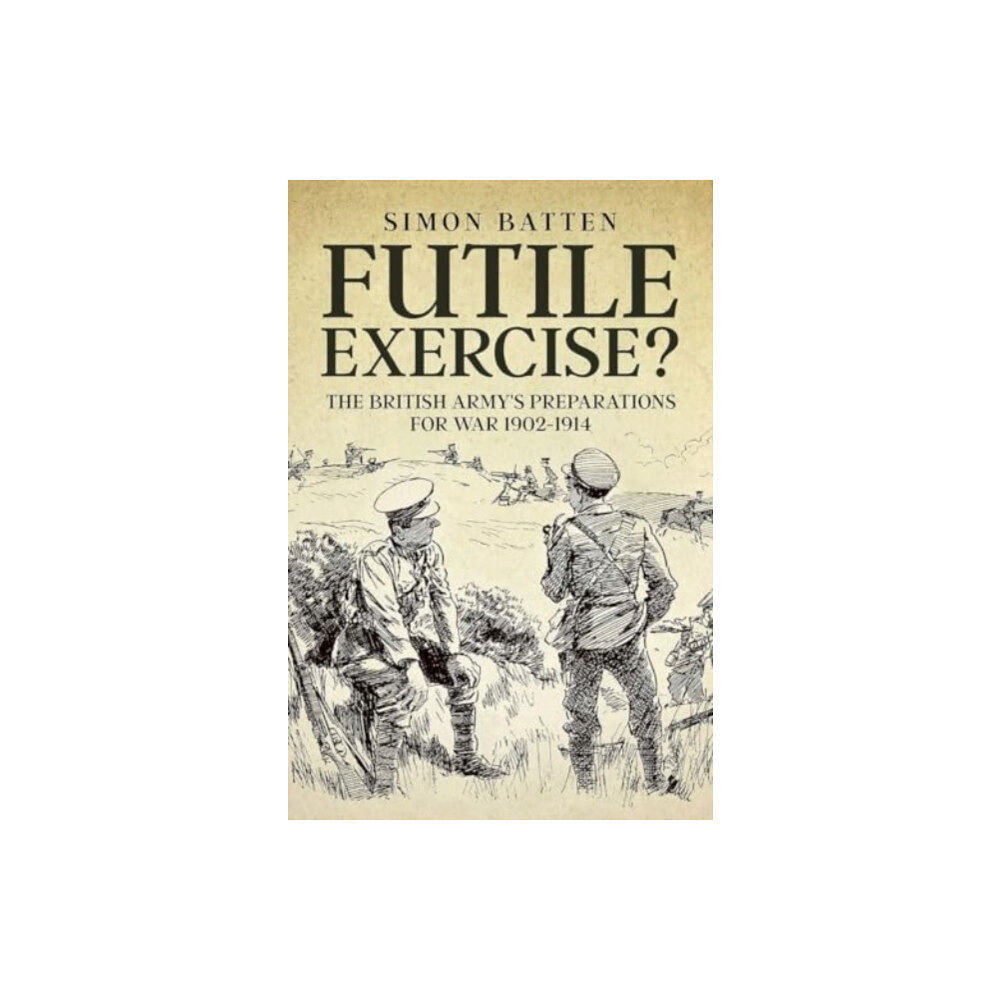
Futile Exercise? (häftad, eng)
Produktbeskrivning
According to the official historian Brigadier-General James Edmonds: ‘In every respect the Expeditionary Force of 1914 was incomparably the best trained, best organized, and best equipped British Army which ever went forth to war’.
There has been considerable debate over the extent to which Edmonds’ claim was justified, and to which the British Army had learnt the lessons of recent events (above all, its chastening experiences in South Africa). Conventional wisdom has it that the British Army in 1914 was utterly unprepared for the development of trench warfare from October 1914 onwards, and that it took many lives and a costly ‘learning curve’ for the British to come to terms with the new conditions of warfare.
Given that war was expected in the decade before August 1914 - and that a great deal of time and money was spent preparing for that war - it seems obvious to ask why the British Army was not better prepared for the war when it came. This raises important issues about how armies learn from their experiences and how they prepare for the unknowable - namely, a war - without employing bullets and shells.
How realistic and useful were the exercises and manoeuvres the British Army used in the period between the end of the Boer War in 1902 and the outbreak of war in August 1914? The approach of most historians has been either to ignore them, or to dismiss them as a waste of time and money.
The manoeuvres carried out between 1902 and 1913 featured large forces - sometimes as many as 45,000 men and 12,000 horses - as well as guns, trucks, trains and the first sizeable force of military aircraft ever employed in Britain. Many of the names later familiar from the Western Front were involved - Haig, French, Rawlinson and Allenby - as well as a great many of the troops who would cross to France with the British Expeditionary Force (BEF) in August 1914.
Their efforts were witnessed by large crowds, as well as politicians, representatives of foreign armies and journalists (some of them ‘embedded’ with army units); there was comprehensive and opinionated coverage in the newspapers of the time.//What lessons were learnt, what value did these manoeuvres have and how do they relate to the events of the war - especially, its opening months? How does the British experience compare with those of the continental armies, who also made extensive use of manoeuvres in this period? Winner of the 2018 Arthur Goodzeit Book Award, presented at The New York Affair Symposium.
| Format | Häftad |
| Omfång | 236 sidor |
| Språk | Engelska |
| Förlag | Helion & Company |
| Utgivningsdatum | 2024-10-15 |
| ISBN | 9781804515686 |
Specifikation
Böcker
- Format Häftad
- Antal sidor 236
- Språk Engelska
- Utgivningsdatum 2024-10-15
- ISBN 9781804515686
- Förlag Helion & Company
Leverans
Vi levererar ditt paket med Budbee, Instabox och DB Schenker. Frakten kostar 49 kr men handlar du för över 499 kr är det fri frakt. De exakta leveranstiderna för varje produkt ser du direkt på produktsidan och i kassan. När din order skickats får du en spårningslänk via e-post eller SMS.
Betalning
Hos oss betalar du tryggt via Avarda. Du kan välja mellan Swish, kort (VISA/MasterCard), faktura med 30 dagar eller konto för delbetalning. Alla köp sker krypterat och säkert.
Retur & reklamation
Som privatkund har du 14 dagars ångerrätt enligt distansavtalslagen. Retur kostar 49 kr och bokas via kundtjänst innan du skickar tillbaka varan. Återbetalning sker alltid via samma betalmedel du använde vid köpet.
Du har 3 års reklamationsrätt enligt konsumentköplagen. Vid godkänd reklamation står vi för returfrakten. Kontakta oss på [email protected] om du vill göra en retur eller reklamation, så guidar vi dig genom processen.
Specifikation
Det finns tyvärr inga specifikationer att visa för denna produkt.