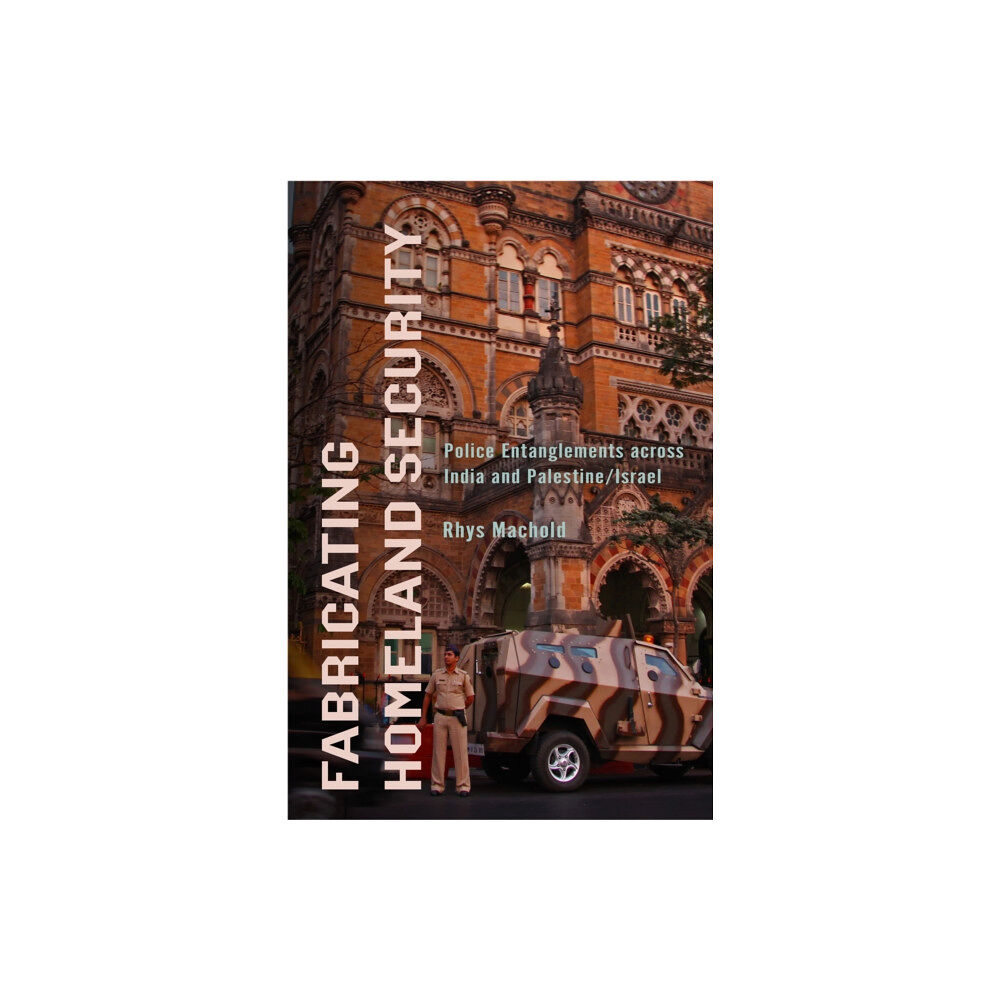
Homeland security is rarely just a matter of the homeland; it involves the circulation and multiplication of policing practices across borders. Though the term "homeland security" is closely associated with the United States, Israel is credited with first developing this all-encompassing approach to domestic surveillance and territorial control.
Today, it is a central node in the sprawling global homeland security industry worth hundreds of billions of dollars. And in the wake of the 2008 Mumbai terrorist attacks, India emerged as a major growth market. Known as "India's 9/11" or simply "26/11," the attacks sparked significant public pressure to adopt "modern" homeland security approaches.
Since 2008, India has become not only the single largest buyer of Israeli conventional weapons, but also a range of other surveillance technology, police training, and security expertise.
Pairing insights from science and technology studies with those from decolonial and postcolonial theory, Fabricating Homeland Security traces 26/11's political and policy fallout, concentrating on the efforts of Israel's homeland security industry to advise and equip Indian city and state governments.
Through a focus on the often unseen and overlooked political struggles at work in the making of homeland security, Rhys Machold details how homeland security is a universalizing project, which seeks to remake the world in its image, and tells the story of how claims to global authority are fabricated and put to work.
| Format |
Häftad |
| Omfång |
372 sidor |
| Språk |
Engelska |
| Förlag |
Stanford University Press |
| Utgivningsdatum |
2024-09-24 |
| ISBN |
9781503640719 |