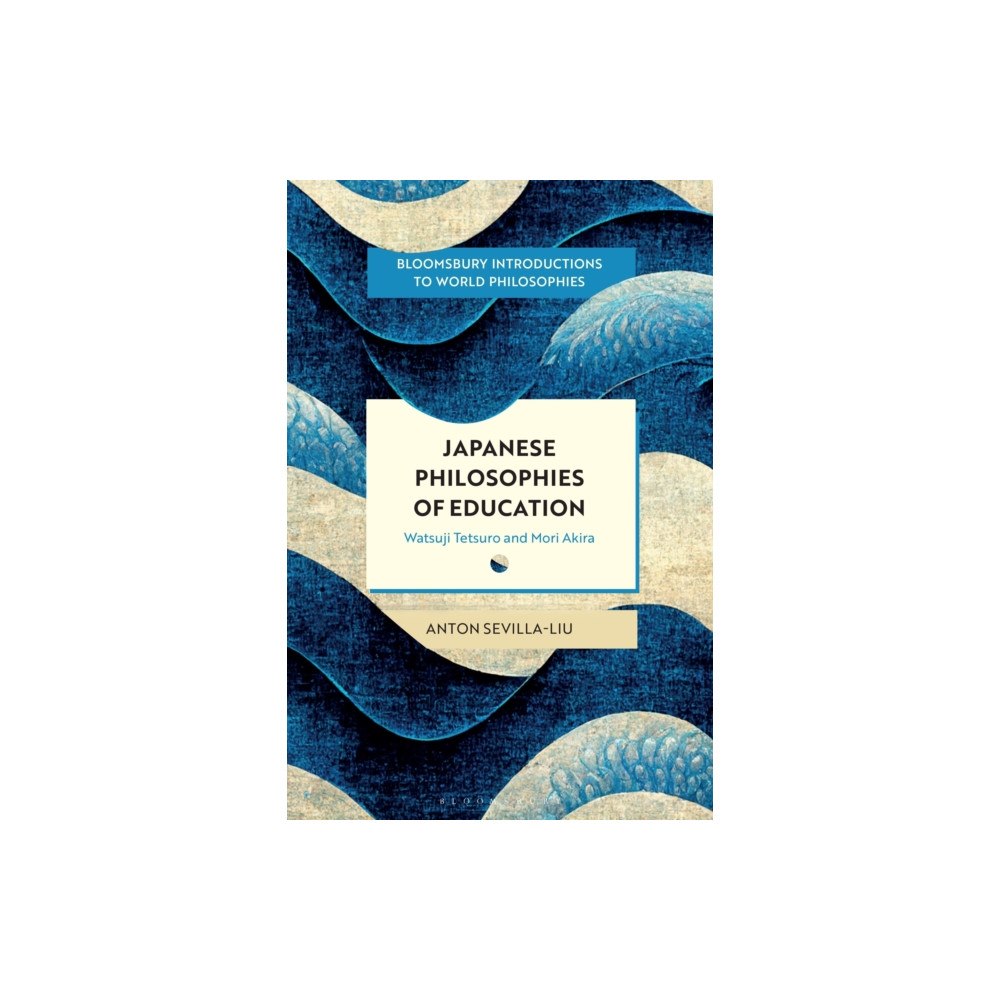
Grounded in Japanese philosophy and ideas of non-duality and emptiness, this is a much-welcomed contribution to central issues in philosophy of education.
Anton Sevilla-Liu uses the thought of ethicist Watsuji Tetsuro (1889-1960) and philosopher of education Mori Akira (1915-1976) to address the dangers of self-centeredness and conformism in a competitive education systemWhen individual performance is encouraged, is there a way to stress relationality without losing the sense of individuality and uniqueness?
We are introduced to Watsuji and Mori’s enlightening views of education, deeply rooted in spiritual insights that originate in Buddhism and Confucianism while engaging human sciencesBy applying their theories to educational practices, Sevilla-Liu shows how to connect students' creative potential with a dynamic sense of community. Importantly, alongside this active philosophy, he introduces Watsuji and Mori’s central concept of letting go of our self-centeredness, fixed roles, attachments to sensations, and rigid ideas.
We see how the philosophy of emptiness can positively impact educational practices.
This engaging book outlines a vision of education that balances individual creativity with a sense of community, responding to real challenges in educational systems around the worldIt is the ideal starting point for educators and students interested in Japanese ideas about learning and unlearning, doing and letting-go, and the unique dynamicity of the philosophy of emptiness.
| Format |
Häftad |
| Omfång |
248 sidor |
| Språk |
Engelska |
| Förlag |
Bloomsbury Publishing PLC |
| Utgivningsdatum |
2026-01-22 |
| ISBN |
9781350572775 |